Uygur Ethnic Group
Introduction
The Uygur ethnic group is one of China's 56 officially recognized ethnic groups, predominantly residing in the Xinjiang Uygur autonomous region. Known for their rich cultural heritage, the Uygurs have a history deeply intertwined with the Silk Road, serving as a bridge between Eastern and Western civilizations. Their vibrant culture, characterized by unique traditions in music, dance, and cuisine, reflects a blend of indigenous customs and influences from neighboring cultures. Over the centuries, they have contributed significantly to the cultural mosaic of China, maintaining a distinct cultural identity while integrating with broader national trends.
History
Throughout history, the Uygurs have been influenced by various cultures due to their strategic location along the Silk Road. This included interactions with Persian, Arab, Mongol, and Chinese cultures, which shaped their religious, linguistic, and cultural practices.
Culture
Language
The Uygur language is part of the Turkic language family. It shares linguistic roots with other Turkic languages such as Uzbek, Kazak, and Kirgiz. The Uygur language has absorbed vocabulary from Persian, Arabic, and Chinese over the centuries due to historical interactions through trade and cultural exchanges. Today, Uygur is not only a medium of everyday communication but also a vehicle for cultural expression in literature, music, and education.
Traditional Clothing
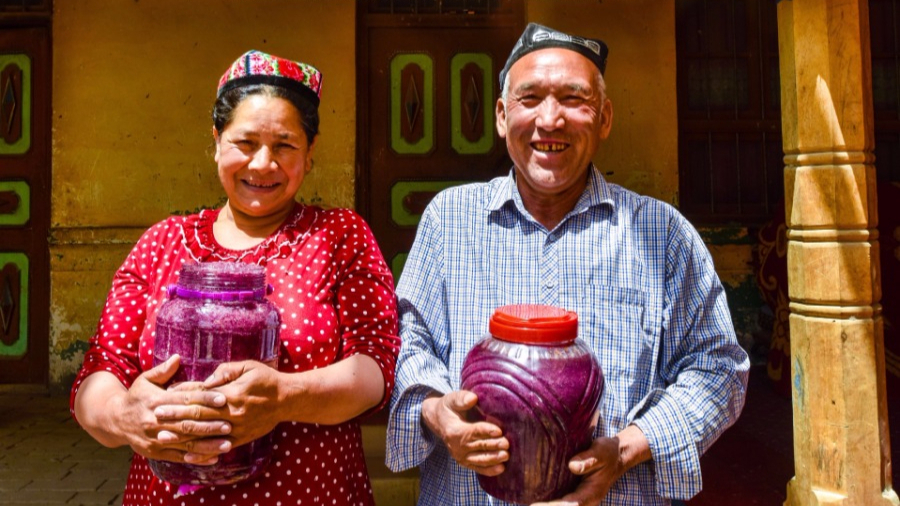
Traditional Uygur clothing reflects a blend of practicality and artistry, suited to the climate and cultural practices of the region. Men typically wear long robes known as "chapan" and hats called "doppa", which are often embroidered with intricate patterns. Women’s attire includes colorful dresses with long skirts and headscarves, reflecting a blend of modesty and vibrant aesthetics. Embroidery and fabric decorations are common, showcasing the Uygur's rich craft traditions and the symbolism of natural and spiritual motifs.
Music and Dance
Music and dance are integral components of Uygur cultural life, with the Twelve Muqams being the most celebrated musical form. Regarded as the "Mother of Uygur Music", these classical compositions combine songs, dances, and instrumental music, forming a cornerstone of Uygur cultural heritage. Instruments such as the dutar, tambur, and rawap are commonly used in performances. Uygur dances are known for their lively movements, expressive gestures, and the ability to convey stories and emotions, often performed at social gatherings and festivals.
Cuisine
Uygur cuisine is renowned for its rich flavors and diverse influences, featuring a variety of spices, meats, and vegetables. Common dishes include laghman, a hand-pulled noodle dish, pilaf or polo, a rice dish often cooked with lamb and carrots, and kebabs, grilled skewers of seasoned meat. Bread, known as naan is a staple in the Uygur diet, often baked in traditional tandoor ovens. The Uygur culinary tradition reflects the agricultural bounty of the region and a historical fusion of Central Asian and Chinese culinary practices.
Demographics
Population Distribution
The Uygur population is primarily concentrated in the Xinjiang Uygur autonomous region, which is located in the northwest of China. Within Xinjiang, significant populations can be found in cities such as Urumqi, Kashgar, and Hotan, among others.
Major Settlements
Kashgar is one of the most historically significant Uygur cities, known for its traditional architecture, vibrant bazaars, and as an ancient hub on the Silk Road. Urumqi, the capital of Xinjiang Uygur autonomous region, is a major urban center with a mix of modern and traditional Uygur influences. Other key settlements include Hotan, known for its jade production, and Turpan, famous for its grape cultivation and historical ruins. These cities and towns are vital cultural and economic centers for the Uygur people, reflecting their historical legacy and modern adaptations.
Society
Social Structure
Uygur society is traditionally organized around family and community structures, with extended families playing a central role in social life. Community gatherings, often centered around religious or cultural events, are common, fostering a strong sense of kinship and mutual support. Elders are respected for their wisdom and experience, often playing advisory roles in family and community matters.
Family Life
Family life among the Uygurs is characterized by close-knit relationships and adherence to cultural and religious traditions. Family gatherings are frequent, often centered around meals, religious observances, or cultural celebrations. Marriage is considered a significant life event, with traditional ceremonies reflecting both traditional customs and local traditions. The upbringing of children is shared within the extended family, emphasizing respect, education, and cultural heritage.
Cultural Preservation and Promotion
Efforts to preserve and promote Uygur culture are ongoing, supported by both community initiatives and governmental programs. Cultural festivals, musical performances, and traditional craft exhibitions serve to celebrate and maintain Uygur heritage. The inclusion of the Twelve Muqams in UNESCO's list of Intangible Cultural Heritage of Humanity highlights international recognition of Uygur contributions to global cultural diversity. Language preservation programs, cultural education, and tourism initiatives also play crucial roles in ensuring that Uygur traditions endure for future generations. Through these efforts, the rich tapestry of Uygur culture continues to thrive, offering a window into the unique history and identity of the Uygur people.








